Background

Technical Support Services UK

Resolve software and application issues through structured diagnosis, troubleshooting and ongoing technical support services.

Clickmasters supports businesses that need technical assistance with existing applications, software workflows, integrations and production issues. Our approach focuses on understanding the problem, identifying the underlying technical cause and determining the appropriate resolution or escalation path.

Our technical support services form part of our broader Software Support & Outsourcing Services, while larger engineering, redevelopment and new application requirements connect with our Software Development Services.

L1 User Support
L2 Bug Investigation
L3 Engineering Escalation
SLA Response Times
Zendesk / Intercom
Knowledge Base Management
5+

Years Experience

200+

Projects Delivered

50+

Clients Served

24/7

Support Available

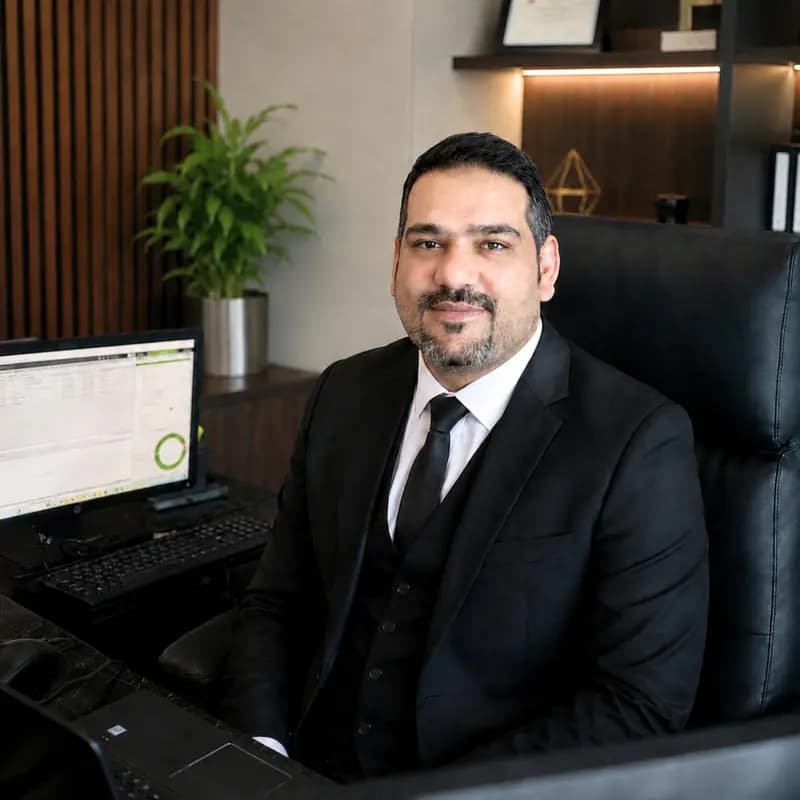
Business client portrait
50+ clients worldwide
4.9/5 rating
Technical Support Services
Jump to

Overview

What Are Technical Support Services?

Technical support services help businesses investigate, diagnose and resolve technical problems affecting software applications and related workflows. The purpose is to determine: A typical support workflow can look like: Technical Issue → Issue Review → Diagnosis → Troubleshooting → Resolution / Escalation → Verification → Documentation Technical support is therefore focused on problem identification and resolution, rather than simply performing general ongoing software development.

  • What has gone wrong
  • Which part of the software is affected
  • What caused the problem
  • How widely the issue affects the application
  • Whether configuration, integration or software changes are required
  • Whether the problem needs escalation into maintenance or development work
What are technical support services?

Technical support services help businesses investigate, diagnose and resolve technical problems affecting software applications and related workflows.

What is application technical support?

Application technical support focuses on helping identify and resolve technical problems affecting an existing software application.

What is the difference between technical support and software maintenance?

Technical support primarily diagnoses and resolves technical problems, while software maintenance focuses on making ongoing changes, fixes and improvements to the software itself.

Services

Resolution or Escalation

Some issues can be resolved through configuration or operational changes. Others may reveal a code-level defect requiring software maintenance or development. In those cases, the issue can move from: Technical Support → Engineering Assessment → Software Maintenance / Development → Testing & Release

Development & Test Environments

Where appropriate, issues can be reproduced outside production before changes are introduced.

Technical Support Services Cost

Technical support cost depends on the application and complexity of the support requirement. Factors can include: A focused application issue has a different scope from recurring problems affecting several integrated software systems.

  • Application complexity
  • Nature of the technical problem
  • Availability of documentation
  • Ability to reproduce the issue
  • Number of affected systems
  • Integration complexity
  • Access requirements
  • Investigation time
  • Required engineering escalation
  • Ongoing support requirements

How Long Does Technical Issue Resolution Take?

Resolution time depends on factors such as: Technical investigation should establish the likely cause before assuming a fixed resolution timeline.

  • Issue complexity
  • Reproducibility
  • Available technical information
  • Application architecture
  • Third-party dependencies
  • Required code changes
  • Testing requirements
  • Deployment process

How much do technical support services cost?

Cost depends on application complexity, issue type, investigation requirements, integrations, technical access and the amount of ongoing support required.

Software Support & Outsourcing Services

Explore our broader support and outsourcing services for software maintenance, technical assistance and external development capacity. Internal Link: `/support-and-outsourcing`

Software Maintenance & Support Services

Use ongoing engineering support for software defects, updates, compatibility changes and application improvements. Internal Link: `/support-and-outsourcing/maintenance-support`

Dedicated Development Team Services

Add an external development team where broader ongoing engineering capacity is required. Internal Link: `/support-and-outsourcing/dedicated-development-teams`

Software Development Services

Explore broader application engineering, redevelopment and custom software-development requirements. Internal Link: `/software-development`

Capabilities

Application Technical Support

Support existing software applications where technical problems affect users, workflows or connected functionality. Application support can involve: The appropriate support process depends on the application architecture and nature of the reported problem.

  • Investigating application errors
  • Reviewing unexpected behaviour
  • Troubleshooting failed functionality
  • Examining user-reported issues
  • Reviewing application logs
  • Identifying integration problems
  • Investigating backend issues
  • Investigating frontend issues
  • Verifying resolved problems

Production Application Support

Applications operating in production may require technical assistance when unexpected behaviour occurs. Support can include investigation around: Production support should be based on the actual architecture and available technical information.

  • Application failures
  • Failed transactions or workflows
  • API problems
  • Authentication issues
  • Integration failures
  • Data-processing problems
  • Application errors
  • Unexpected output

Application Troubleshooting

Investigate technical problems affecting expected application behaviour.

Application Configuration Issues

Unexpected behaviour can sometimes originate from incorrect or inconsistent application configuration rather than the core software code.

Application Errors Affecting Users

Users may encounter errors, failed processes or unexpected software behaviour that requires technical investigation.

Unexpected Application Behaviour

The application may continue operating but behave differently from the expected workflow.

Customer-Facing Application Support

Web applications, portals and digital products may require investigation when users report technical problems.

Application Logs

Logs can provide technical evidence about:

  • Errors
  • Failed processes
  • API responses
  • Application events
  • System behaviour

Issue Tracking

Technical issues can be recorded with information such as: This creates a clearer history of recurring or related problems.

  • Description
  • Severity
  • Status
  • Technical findings
  • Required action
  • Resolution
  • Verification

Can technical support help with production applications?

Technical support can investigate issues affecting production applications where appropriate technical access and information are available.

How It Works

How Technical Support Works

Technical support begins by collecting enough information to understand and reproduce the problem. A typical support lifecycle can look like: Issue Reported → Information Collection → Reproduction → Technical Investigation → Root-Cause Identification → Resolution / Escalation → Testing → Closure

Integration Support

Review problems occurring between an application and connected APIs, platforms or other software systems.

Integration Failures

A connection between two systems may stop working correctly after external or internal changes.

Investment

How long does it take to resolve a technical issue?

Resolution time depends on the issue's complexity, reproducibility, application architecture, available technical information and whether software changes are required.

Deliverables

What You Receive

Deliverables depend on the agreed support scope and can include: Where investigation identifies a code-level problem, additional maintenance or development work can be scoped separately.

  • Technical issue assessment
  • Application investigation
  • Issue reproduction
  • Troubleshooting
  • Root-cause findings
  • Integration investigation
  • API troubleshooting
  • Configuration review
  • Resolution recommendations
  • Technical escalation
  • Issue verification
  • Support documentation
  • Issue history
  • Handover information

Details

10 Target SEO Keywords

  • technical support services UK
  • software technical support services
  • application technical support
  • software support services UK
  • application support services UK
  • technical software support
  • software troubleshooting services
  • application support company UK
  • software issue resolution
  • outsourced technical support services

Software Troubleshooting

Troubleshooting involves systematically narrowing down the possible causes of a technical problem. A typical workflow can follow: Reported Problem → Reproduce Issue → Review Technical Evidence → Isolate Cause → Determine Resolution → Verify Result Troubleshooting can involve software behaviour, integrations, application configuration, data flows or other connected components.

Technical Issue Diagnosis

The visible symptom is not always the actual cause of a software problem. Technical diagnosis can consider: The aim is to identify the source of the problem before deciding what corrective work is appropriate.

  • Application errors
  • Logs
  • API responses
  • Database behaviour
  • Integration failures
  • Configuration
  • User actions
  • Recent software changes
  • Environment differences
  • Reproducibility

Incident Support

Production software can occasionally experience issues that affect normal application operation. Incident support can involve: The required process depends on the severity and business impact of the incident.

  • Recording the issue
  • Assessing impact
  • Gathering technical information
  • Investigating the cause
  • Identifying a workaround where appropriate
  • Escalating software defects
  • Verifying restoration
  • Documenting findings

Issue Reporting

Useful information can include: Clear issue information helps narrow the investigation.

  • What happened
  • Expected behaviour
  • Actual behaviour
  • Affected functionality
  • Error messages
  • Screenshots where relevant
  • Time of occurrence
  • User actions
  • Environment
  • Whether the problem can be reproduced

Issue Reproduction

Where possible, reproducing the problem can help determine:

  • Which conditions trigger it
  • Whether it affects all users
  • Whether it is environment-specific
  • Which software component is involved
  • Whether recent changes are related

Technical Investigation

Investigation can involve reviewing relevant application components such as:

  • Source code
  • Application logs
  • APIs
  • Databases
  • Integrations
  • Application configuration
  • Deployment environment
  • Recent changes

Error Investigation

Analyse application errors to understand where and why the failure is occurring.

API Issue Investigation

Technical support can investigate:

  • Failed API requests
  • Authentication failures
  • Unexpected responses
  • Data-format problems
  • Endpoint errors
  • Integration behaviour

Database-Related Issue Investigation

Where relevant, troubleshooting can examine application issues connected with:

  • Data retrieval
  • Data processing
  • Query behaviour
  • Application/database communication
  • Unexpected stored information

Authentication & Access Issues

Application support can investigate software-level problems related to:

  • Login workflows
  • Application permissions
  • Authentication processes
  • Session behaviour
  • Connected authentication services

User-Reported Technical Issues

Support workflows can convert user-reported problems into structured technical issues for investigation.

Production Software Issues

Deployed software may experience problems that require structured diagnosis and resolution.

API Problems

Applications dependent on APIs can experience authentication, response, connectivity or data-exchange problems.

Internal Software Support

Business-critical internal applications may need technical assistance when operational users encounter software problems.

Support for Existing Software

Businesses inheriting or operating an existing application may require technical assistance before deciding whether deeper maintenance or redevelopment is necessary.

Technical Support & Issue Escalation

Not every software issue requires the same type of engineering response. A useful escalation model can be: Reported Issue → Initial Investigation → Technical Diagnosis Configuration / Operational Issue → Technical Resolution Code-Level Defect → Software Maintenance Larger Functional Requirement → Software Development This distinction helps prevent routine technical support from becoming mixed with unrelated development work.

Issue Severity

Issues can be assessed according to factors such as:

  • Number of affected users
  • Business impact
  • Loss of functionality
  • Availability of a workaround
  • Technical risk
  • Data impact
  • Reproducibility

Escalation

A problem may require deeper engineering when:

  • A software defect is identified
  • Source-code changes are required
  • An integration requires redevelopment
  • Architecture changes are needed
  • Existing functionality requires modification

Technical Support for Existing Software

Technical support needs access to enough application context to investigate issues accurately.

Monitoring Information

Where monitoring exists, technical information can help identify changes in:

  • Application availability
  • Error rates
  • Processing failures
  • API behaviour
  • Performance

Source Code

Code access may be necessary when investigation indicates that application logic could be responsible for the problem.

Technical Documentation

Existing architecture, API and deployment documentation can help reduce uncertainty during troubleshooting.

Technical Support vs Software Maintenance

These services work closely together, but their primary intent is different. User Reports Application Failure → Technical Support Investigates → Software Defect Identified → Maintenance Team Corrects Code → Change Tested → Application Updated For ongoing software fixes, updates and codebase improvements, explore our Software Maintenance & Support Services.

Technical SupportSoftware Maintenance & Support
Investigates technical problemsMakes ongoing changes to software
Troubleshoots issuesFixes code-level defects
Diagnoses causesUpdates software
Handles issue escalationImproves maintainability
Supports production problemsHandles compatibility changes
Primarily problem-focusedPrimarily engineering-focused

What does software technical support include?

Software technical support can include issue investigation, application troubleshooting, technical diagnosis, integration support, incident investigation, escalation and resolution verification.

Can technical support troubleshoot software errors?

Yes. Technical support can investigate software errors to identify the affected application area, likely cause and appropriate resolution or escalation path.

Can technical support help with API problems?

Technical support can investigate API-related issues such as failed requests, authentication problems, unexpected responses and data-exchange errors.

Can technical support help with existing software?

Yes. Existing applications can potentially be supported where sufficient access, technical information and software context are available for investigation.

What happens if technical support finds a software bug?

If investigation identifies a code-level defect, the issue can be escalated into software maintenance or development for correction, testing and release.

Can you support software developed by another company?

Existing software can potentially be supported after the application, available documentation, technical environment and required access have been assessed.

Is technical support the same as IT help desk support?

Not necessarily. This service focuses on technical support for software applications and related software workflows rather than general end-user hardware or broad IT help desk support.

Resolve Software Issues with Clickmasters

Get structured technical support for application problems, integration failures and other software issues affecting existing systems. Clickmasters can help investigate the problem, identify the likely technical cause and determine whether it can be resolved through support or requires escalation into software maintenance or further development.

How Much Does This Cost?

The cost depends on the scope and complexity of your project. Key factors that influence the budget include:

Application complexity
Nature of the technical problem
Availability of documentation
Ability to reproduce the issue
Number of affected systems
Integration complexity
Access requirements
Investigation time
Required engineering escalation
Ongoing support requirements
Issue complexity
Reproducibility
Available technical information
Application architecture
Third-party dependencies
Required code changes
Testing requirements
Deployment process

Why Choose Clickmasters

Why Choose Clickmasters for Technical Support?

Clickmasters approaches technical support as part of the wider software-development lifecycle rather than treating application problems in isolation. Our support workflow can connect: Reported Problem → Technical Investigation → Root-Cause Diagnosis → Resolution / Engineering Escalation → Verification → Ongoing Software Support This allows technical issues to be connected with the application's underlying architecture and wider development requirements. For broader application engineering, redevelopment or new software requirements, explore our Software Development Services.

What we deliver

Technical Support Services We Deliver

04 capabilities

Clickmasters operates as a full-stack technical support partner — product strategy, UI/UX, engineering, cloud infrastructure, QA, and ongoing support in one delivery model.

01

L1 User Support

Trained L1 support agents who know your product: onboarding (agents learn product from documentation, sandbox environment, structured knowledge transfer with your team 1-2 weeks before go-live), knowledge base management (maintain and update support knowledge base new articles for common questions, updated when product changes), SLA-backed response (all tickets acknowledged within agreed response window typically 4 hours for L1), ticket metrics (weekly report tickets received, resolved, escalated, mean time to first response, CSAT score).

02

L2 Technical Investigation

Trained L2 agents with technical skills investigate bugs before reaching engineering: reproduction protocol (reproduce reported issue in staging environment from exact steps if reproducible, document reproduction steps, environment details, expected vs actual behaviour), log analysis (search CloudWatch logs, Sentry, application logs for error or anomaly extract relevant log entries), data investigation (safe read-only SQL queries to inspect user's account data state identify data anomalies), escalation package (when escalating to L3, ticket includes: confirmed reproduction steps, log excerpts, data state findings, and L2 agent's hypothesis so engineers spend time fixing, not investigating).

03

L3 Engineering Interface

Managing boundary between support and engineering: L3 bug queue (confirmed bugs from L2 added to engineering backlog with full reproduction context developers spend time on fixing, not reproduction), severity triage (L2 agents assign severity based on impact Critical bugs escalated to on-call engineer immediately, others scheduled in sprint), data correction requests (L2 identifies data correction needed L3 engineer reviews, writes and executes correction script safely with backup), root cause reporting (L3 engineers document root cause and fix for each confirmed bug L2 uses this to recognise similar issues faster in future).

04

Helpdesk Tool Management

Clickmasters manages support toolchain: Zendesk (ticket routing, macros for common responses, SLA timers, CSAT surveys, reporting dashboards Clickmasters configures and maintains Zendesk instance), Intercom (in-app messaging, product tours, targeted messages Clickmasters manages Intercom conversations and in-app help centre), Linear or Jira (bug escalation to engineering team Clickmasters creates L3 tickets with correct template and links to originating Zendesk ticket), support analytics (weekly and monthly reports ticket volume trends, most common issue categories, first-contact resolution rate, escalation rate, CSAT).

Why choose us

Why Companies Choose Clickmasters

05 advantages

We combine architecture discipline, transparent delivery, and long-term partnership — so your investment translates into measurable business results, not just shipped code.

01

4-Tier Support Table (L1/L2/L3/L4)

What it covers, skills required, escalation trigger clear taxonomy | Basic: Single-tier support (overqualified for L1, underqualified for L3)

02

First-Contact Resolution Rate

Percentage resolved by L1 without escalation tracked and reported | Basic: No FCR tracking

03

CSAT Score Metric

Customer satisfaction score from post-resolution surveys monthly reporting | Basic: No CSAT

04

Shadowing Period Before Go-Live

Agents handle tickets alongside client's existing support team for 1 week, responses reviewed | Basic: Go-live without validation

05

L2 Escalation Package Contents

Confirmed reproduction steps, log excerpts, data state findings, hypothesis engineers fix not investigate | Basic: Raw user report (engineering reproduced)

500+

Companies served

4.9/5

Client rating

15+

Years in delivery

Our Process

How We Deliver Technical Support

A clear, structured approach — so you always know what happens next and why.

01

Phase 1

Support Programme Setup

Knowledge transfer (product documentation, sandbox training, sessions with client's team), knowledge base creation (articles for common questions), Zendesk/Intercom configuration (routing, macros, SLAs, CSAT), runbooks documentation. Deliverable: Support Programme + Knowledge Base.

2-3 weeks
02

Phase 2

Shadowing Period

Agents handle tickets alongside client's existing support team, responses reviewed before sending, client confirms product knowledge before go-live. Deliverable: Approved Go-Live.

1 week
03

Phase 3

L1 Support Delivery

Trained agents handle L1 tickets (how-to questions, known issue workarounds), knowledge base management (new articles, updates), SLA-backed response, weekly ticket metrics report. Deliverable: Weekly Support Metrics.

Ongoing
04

Phase 4

L2 Investigation

Reproduction in staging, log analysis (CloudWatch, Sentry), data investigation (read-only SQL), escalation package (reproduction steps, logs, findings, hypothesis). Deliverable: L2 Escalation Package.

As escalated
05

Phase 5

L3 Engineering Escalation

Confirmed bugs added to engineering backlog, root cause documentation, data correction scripts, knowledge base update for L2 to recognise similar issues. Deliverable: Fixed Bug + Updated KB.

As escalated

Technology Stack

Modern tools we use to build scalable, secure applications.

Back-end Languages

.NET
.NET
Java
Java
Python
Python
Node.js
Node.js
PHP
PHP
Go
Go

Front-end Technologies

HTML5
HTML5
CSS3
CSS3
JavaScript
JavaScript
TypeScript
TypeScript
React
React
Next.js
Next.js
Vue.js
Vue.js
Angular
Angular
Svelte
Svelte

Databases

PostgreSQL
PostgreSQL
MySQL
MySQL
SQL Server
SQL Server
Oracle
Oracle
MongoDB
MongoDB
Redis
Redis
Firebase
Firebase
Elasticsearch
Elasticsearch

Cloud & DevOps

AWS
AWS
Azure
Azure
Google Cloud
Google Cloud
Docker
Docker
Kubernetes
Kubernetes
Terraform
Terraform
Jenkins
Jenkins

Industry-Specific Expertise

Deep expertise across various sectors with tailored solutions

SaaS Customer Support

Enterprise Support Triage

24/7 Technical Support

Post-Launch Support

Pricing

Technical Support Development Pricing

Transparent pricing tailored to your business needs

Support Programme Setup

Perfect for businesses that need support programme setup solutions

£3,000 – £7,000

GBP · one-time investment range

Package Includes

  • Timeline: 2 - 3 weeks
  • Best For: Knowledge transfer, knowledge base, Zendesk config, SLA definition, runbooks
  • Budget Range: £3,000 - £7,000 GBP
  • Dedicated Project Manager
  • Quality Assurance Testing
  • Documentation & Training

L1 Support (Email/Chat)

Perfect for businesses that need l1 support (email/chat) solutions

£2,000 – £5,000

GBP · one-time investment range

Package Includes

  • Timeline: Monthly
  • Best For: Trained agent, SLA-backed response, knowledge base management, weekly report
  • Budget Range: £2,000 - £5,000 GBP
  • Dedicated Project Manager
  • Quality Assurance Testing
  • Documentation & Training

L1 + L2 Support

Perfect for businesses that need l1 + l2 support solutions

£4,000 – £10,000

GBP · one-time investment range

Package Includes

  • Timeline: Monthly
  • Best For: L1 + technical investigation, reproduction, log analysis, L3 escalation packages
  • Budget Range: £4,000 - £10,000 GBP
  • Dedicated Project Manager
  • Quality Assurance Testing
  • Documentation & Training

L1 + L2 + L3 Escalation

Perfect for businesses that need l1 + l2 + l3 escalation solutions

£6,000 – £16,000

GBP · one-time investment range

Package Includes

  • Timeline: Monthly
  • Best For: Full support stack, engineering interface, bug queue management, data corrections
  • Budget Range: £6,000 - £16,000 GBP
  • Dedicated Project Manager
  • Quality Assurance Testing
  • Documentation & Training

Dedicated Support Engineer (L2/L3)

Perfect for businesses that need dedicated support engineer (l2/l3) solutions

£5,000 – £9,000

GBP · one-time investment range

Package Includes

  • Timeline: Monthly
  • Best For: Technical specialist embedded in support, knows codebase, handles L2+L3
  • Budget Range: £5,000 - £9,000 GBP
  • Dedicated Project Manager
  • Quality Assurance Testing
  • Documentation & Training

Support Transformation

Perfect for businesses that need support transformation solutions

£5,000 – £14,000

GBP · one-time investment range

Package Includes

  • Timeline: 4 - 6 weeks
  • Best For: Audit + knowledge base creation + Zendesk setup + agent training + handover
  • Budget Range: £5,000 - £14,000 GBP
  • Dedicated Project Manager
  • Quality Assurance Testing
  • Documentation & Training
Transparent Pricing
No Hidden Costs
Flexible Engagement
30-Day Support

* All prices are estimates and may vary based on requirements.

CEO Vision

To build scalable, intelligent custom software development solutions that empower businesses to grow, automate, and transform in a digital-first world.

CEO Vision
“
We are not building software. We are architecting the infrastructure of tomorrow—systems that think, adapt, and grow alongside the businesses they power.
AK

Amjad Khan

Chief Executive Officer

12+

Years Exp

300+

Success

98%

Retention

What Our Clients Say

Loading testimonials...

Success Stories

UK

HealthTech Clinical Decision Support — UK Oncology Centre

A UK cancer centre treating 4,200 patients per year wanted to build a clinical decision support (CDS) tool for...

HealthTech
Core Tech Stack
PythonFastAPIPostgreSQL+3
UK

LegalTech Court Bundle Digital Platform — UK Litigation Support

A UK top-20 litigation law firm with 240 fee earners, 180 ongoing matters with court bundles, and significant ...

LegalTech
Core Tech Stack
ReactNode.js/FastifyPostgreSQL+3
UK

MedTech NHS Sepsis Early Warning System — ICU Network

An NHS ICU Network covering 8 hospital intensive care units with 280 ICU beds and 18,000 annual admissions wan...

MedTech
Core Tech Stack
Python/FastAPIXGBoostHAPI FHIR R4+3
UK

HealthTech NHS Radiology AI Clinical Decision Support — NHS Trust

An NHS Teaching Hospital Trust processing 840,000 radiology examinations per year needed to implement AI clini...

HealthTech
Core Tech Stack
ReactNode.js/FastifyPostgreSQL+3
UK

GovTech Local Authority Housing Allocations Platform — UK District Council

A UK District Council managing 4,800 properties (council and housing association) with 3,400 applicants on the...

GovTech
Core Tech Stack
ReactGOV.UK Design SystemNode.js/Fastify+3

Ready for Your Success Story?

Start Project

Common Inquiries

Frequently Asked Questions

Still have questions?

Can't find the answer you're looking for? Please chat to our friendly team.

Explore Related Capabilities

Discover how we can help transform your business through our comprehensive services, real-world case studies, or our full solutions portfolio.